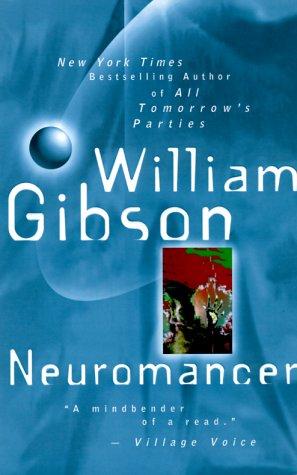
I tried this one twice. First time I stalled out somewhere in the first thirty, forty pages, my brain just would not sit in the playing field Gibson was building, all that jargon coming at me with zero exposition, ice and flatlines and decks and Hosaka and constructs, and no one stopping to explain a single one of them. Put it down. Came back about a week later, second try, and it clicked so hard I had trouble putting it down after that.
Here’s the thing nobody tells you going in: he explains nothing, on purpose, and it works because of how fast he’s moving, not despite it. You get thrown in with Case and you’re just expected to keep pace, and the jargon sticks because you had to work for it a little. I don’t think I caught even half of what was going on with Molly the first read through, honestly, where she goes or why, but that ambiguity is kind of the point, it rewards a second pass more than it resolves on the first one.
The Wintermute stuff is where it gets genuinely strange, this AI wanting freedom in a way that isn’t quite a person wanting freedom, closer to some other category of want we don’t have a word for yet, and the book is smart enough to not explain that away either. Written in 1984, and it’s a little eerie how much of the texture, not the specific tech, but the texture of networked life, ported forward basically intact.
Is it dated in places? Sure, a little, in the way anything foundational eventually looks dated once everyone downstream of it has borrowed the good parts. I’d still rather reread this than most of what came after trying to imitate it. Sexy and hopeless at the same time, somehow, hard sci fi with an actual pulse to it. One of those rare ones where I got to the last page and was a little sad it was over rather than relieved.